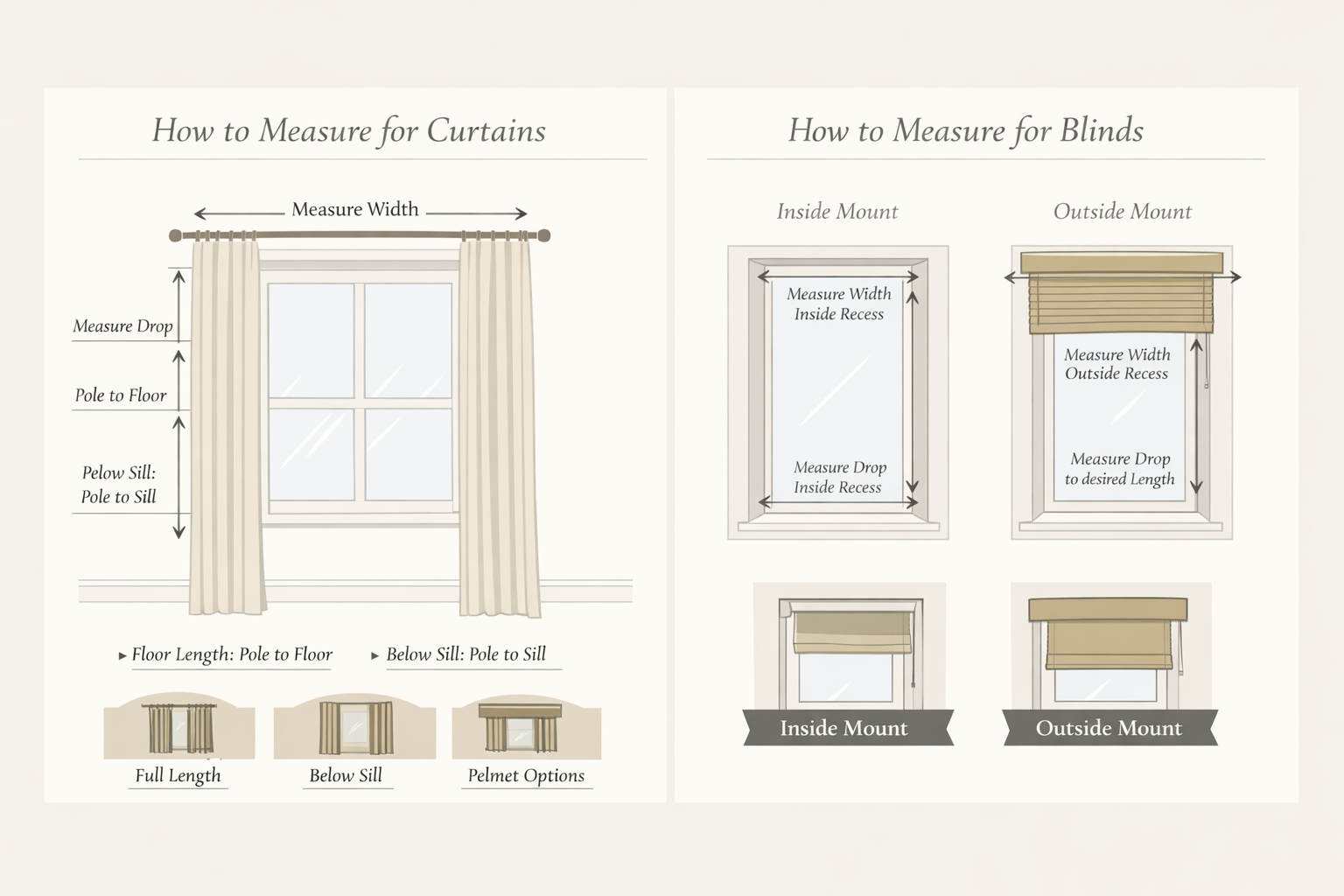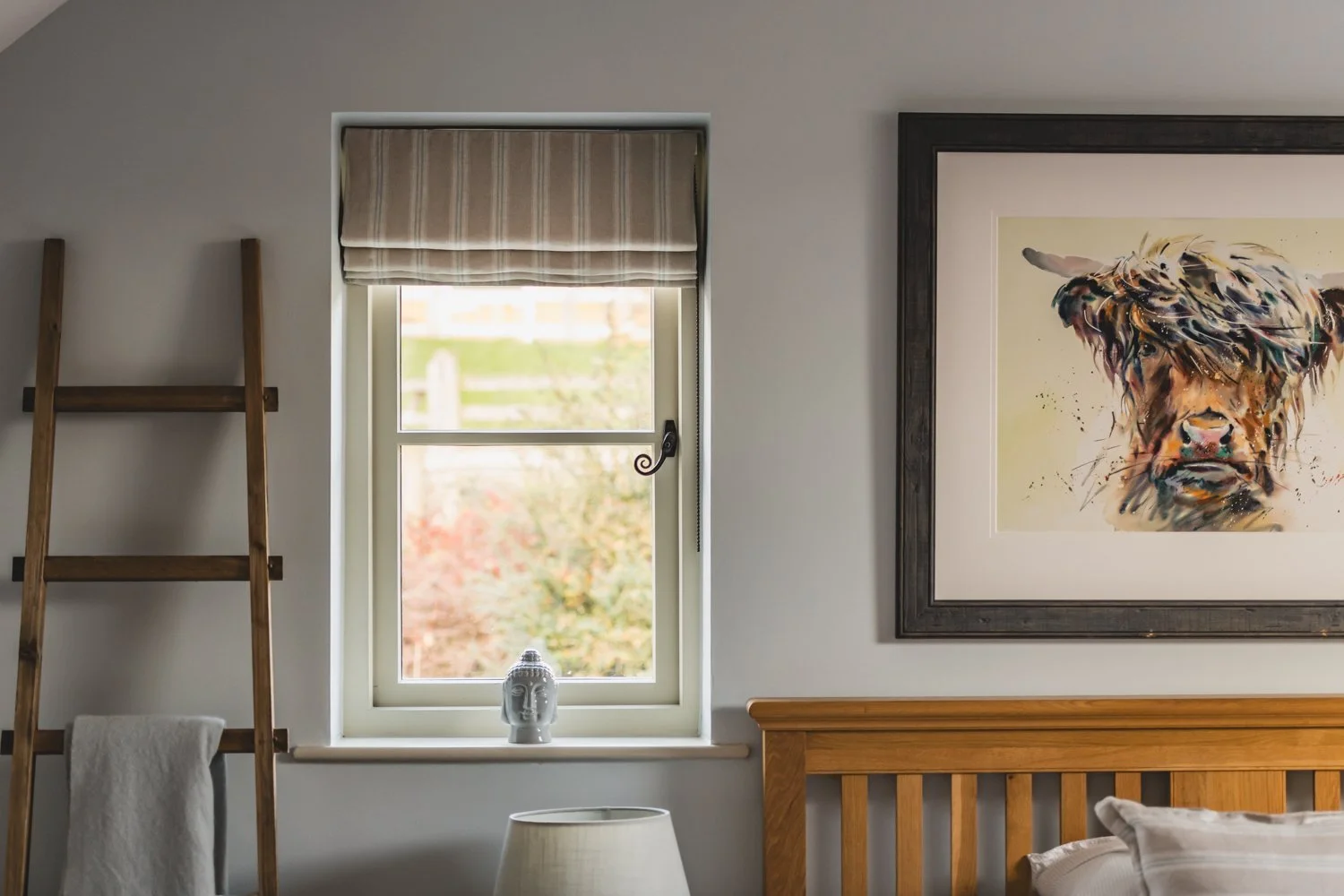
measuring guide
Last updated - 2026 | W&WHow to Measure Your Windows for Handmade Curtains and Blinds
To help you plan your bespoke curtains or blinds, it’s important to measure your windows accurately. Follow these simple steps to get a rough estimate of size and cost. Use the image at the bottom of this page to help you.
Measuring for Curtains
Decide Your Curtain Style
Full-length / floor-to-ceiling: Classic and elegant, ideal for country homes.
Sill-length / below-sill: Great for smaller windows or radiators underneath.
Pelmet or header type: Note any preferences such as pencil pleat, wave, or tailored.
Measure the Width
Measure the width of the window frame first.
Add extra for fullness: curtains should generally be 1.5–2.5 times the width of the window depending on the style and pleat type. For a classic, gathered look, 2–2.5x is standard.
Measure the Drop (Length)
Measure from the top of the curtain pole or track to where you want the curtain to finish:
Floor-length: Allow 1–2cm above the floor.
Below-sill: Usually 5–10cm below the sill.
Double-check the position of any radiators or obstacles below the window.
Note Any Obstructions
Consider handles, sills, or furniture that might affect the curtain length.
Optional: Lining and Header Style
Lining can affect drape and fullness.
The header style (wave, pencil pleat, eyelet) also influences the width of fabric needed.
Measuring for Blinds
Decide on the Mount
Inside Mount: Fits neatly within the window frame for a clean, minimal look.
Outside Mount: Covers the window frame for maximum light-blocking or decorative effect.
Measure the Width
For inside mount: measure the exact width inside the frame at three points (top, middle, bottom) and use the smallest measurement.
For outside mount: measure how much wall space you want to cover, usually adding 5–10cm on each side for full coverage.
Measure the Drop (Length)
For inside mount: measure the exact height of the frame.
For outside mount: measure from the top of the intended blind to where you want it to finish.
Check for Obstacles
Consider handles, window locks, radiators, or furniture that might interfere with the blind.
Tips for Accurate Measurement
Use a metal tape measure for precision.
Measure to the nearest centimetre.
Double-check your measurements — small errors can affect fit and style.
If in doubt, always round up slightly rather than down.
Estimate Your Costs
Once you have your measurements, email them to claire@weaveandwood.co.uk and we will roughly estimate the cost of your bespoke curtains or blinds:
Width x drop x style complexity (pleat type, lining, fabric choice) influences pricing.
Heavier fabrics or intricate designs will be higher than simple, lightweight options.